
How Long Do Veneers Last? An Irvine Dentist's Guide to Care and Maintenance
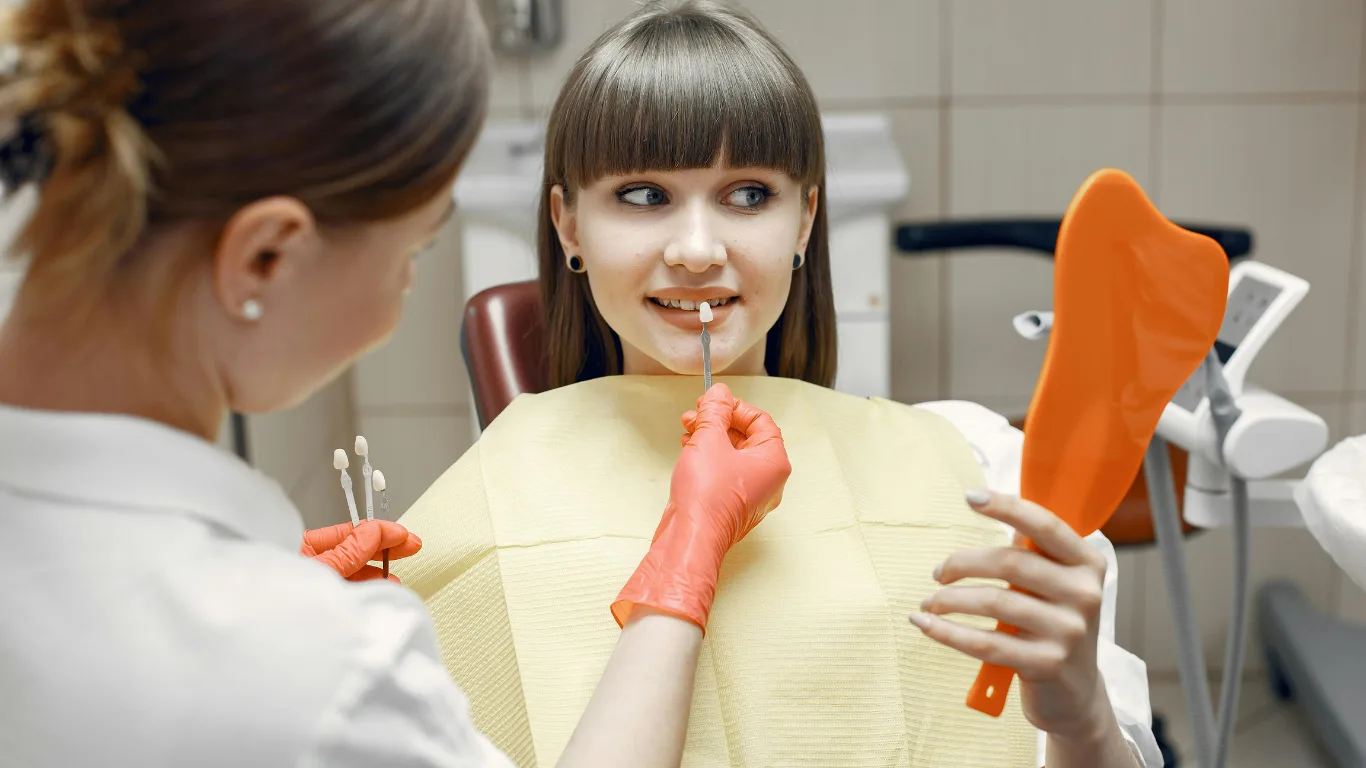
Porcelain veneers can last well past a decade, if a few things go right. An Irvine dentist breaks down the real numbers and what actually protects them.
Porcelain veneers typically last 10 to 15 years, and a well-placed set can go 20 or more. A 2025 retrospective study that followed 672 veneers in 189 patients for up to 15 years found a 96% cumulative survival rate, with most failures tracing back to how much of the veneer was bonded to enamel versus dentin. Composite veneers, the cheaper alternative, generally hold up 5 to 8 years before needing replacement.
In this article:
- The real survival numbers, by material
- What actually shortens a veneer's life (and what doesn't)
- Five questions patients ask us most before committing
- What we can tell you once we've seen your teeth
Ninety-six percent, fifteen years out. That's the headline number from a study that tracked real veneers in real patients rather than lab samples, and it's a better starting point than the vague "veneers last a long time" you'll see on most dental sites (PMC, 2025). The number is real. What it doesn't tell you is why some veneers land in that 96%, and why some don't. That's the part worth understanding before you book anything: start with our veneers page for the procedure itself, or keep reading for what happens after it's placed.[1]
How Long Do Porcelain Veneers Actually Last?
Most porcelain veneers last 10 to 15 years, and a meaningful share go well beyond that with the right conditions in place. The material matters: lithium disilicate ceramics, a stronger glass-ceramic option, tend to edge out older feldspathic porcelain on survival rate, though the gap is smaller than marketing pages often suggest.
The 2025 study mentioned above followed 672 veneers for up to 15 years and reported a mean survival time of just under 6 years before any complication (not necessarily failure), but a 96% cumulative survival rate at the full 15-year mark, once minor, repairable issues were excluded (PMC, 2025). A separate systematic review pooling 6,500 veneers across 25 studies put the 10-year survival figure at 95.5%, broken down by failure type: fracture accounted for most of what failure did occur, at a 96.3% survival rate against fracture alone, while debonding and secondary decay were rarer still (PMC, 2021 systematic review). Composite resin veneers, by contrast, typically run 5 to 8 years before needing replacement or significant repair, not because the material is inferior for every purpose, just less durable under the same conditions.[1][2]
Enamel bonding is the single biggest factor in whether a veneer lands in the "long survival" group or not.
What Actually Shortens (or Extends) Veneer Lifespan?
The honest answer is that most of what determines lifespan happens before the veneer is ever placed, and most of what protects it after happens at home, not in the chair.
What tends to shorten it:
- Grinding or clenching (bruxism): thin porcelain shells aren't built to absorb repetitive high-force contact
- Bonding to dentin rather than enamel, when very little natural enamel remains to bond to
- Biting hard objects directly with the front teeth, such as ice, pen caps, or fingernails
- Going years between checkups, so small chips or marginal wear go uncaught
What tends to extend it:
- A properly fitted nightguard if grinding is a factor
- Sticking to routine cleanings, where small issues get caught while they're still repairable
- Avoiding the same habits that stain natural teeth. Porcelain resists staining well, but the margins where it meets your natural tooth don't get the same protection
A patient of ours a couple years back was convinced her veneers had "just worn out" after eight years. What had actually happened was years of unmanaged grinding: the veneers weren't at fault, the nightly clenching was. A guard and a bit of adjustment later, the replacement set is still holding.
Sources
Common questions
Frequently asked questions
Trust & Authority
About the author: Dr. Nova Li, DDS, earned her dental degree from UCLA School of Dentistry in 2018, after training at Sun Yat-Sen University (2014) and the USC Implant Program (2015). She has continued her education at the Kois Center and Magne Education, with a focus on full-mouth rehabilitation, biomimetic dentistry, and immediate dentin sealing. Read her full bio.
We fit and maintain veneers for patients across Irvine, and the grinding-related cases are the ones we see most often outside of normal wear, usually solvable, rarely a reason to redo the whole set.
Summary and Next Step
The numbers are genuinely good: 95 to 96% of well-placed porcelain veneers are still doing their job a decade or more later. Whether yours land in that group comes down to material, how much enamel they're bonded to, and what happens to them after, most of which is manageable with the right care.
Curious whether your bite or grinding habits would affect veneer longevity for you specifically? Book a consultation with Nova Dental Studio, 113 Waterworks Way Ste. 335, Irvine, CA 92618.
Disclaimer:
This is educational content, not a diagnosis. Veneer longevity varies by individual, bite, and habits like grinding. A comprehensive evaluation by Dr. Nova Li is required to determine what's right for your teeth.
Make your Nova smile a reality.
Join our family of happy, healthy smiles today and experience the Nova Smile difference!
More Articles
View all Preventive Dentistry
Does Teeth Shape Affect Oral Health, Not Just Appearance?
Unusual tooth shape isn't just cosmetic. Our Irvine dental team explains how it affects cleaning, wear, and jaw health, and what actually helps.September 15, 2026 · 5 min read Restorative Dentistry
Dental Implants vs. Dentures: Which Is Right for You in Irvine?
Weighing dental implants vs. dentures in Irvine, CA? Compare cost, longevity, comfort, and bone health to choose the right tooth-replacement option with confidence.August 8, 2026 · 8 min read Preventive Dentistry